
Glass balustrades are often admired for their visual qualities. They create openness, allow light to travel freely, and support a clean architectural language that feels both modern and timeless. What is rarely discussed, however, is that the success of any glass balustrade system is determined long before the glass is installed. The real performance of the system depends on the glass balustrade fitting.
Balustrade fittings are not decorative accessories or secondary components. They are the structural interface between glass and building, responsible for safety, load transfer, alignment, and long-term stability. Without carefully engineered fittings, even the highest specification glass cannot function reliably as a barrier.
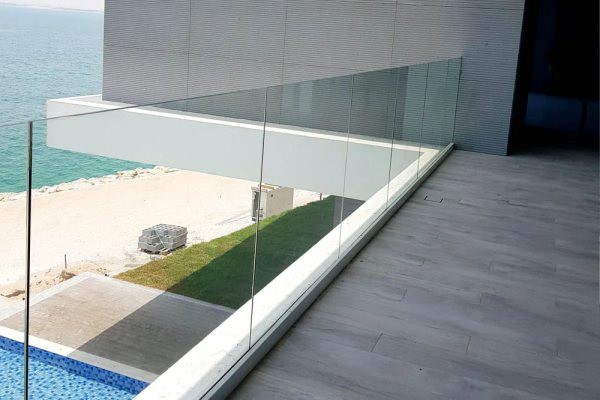
Glass is strong, but it behaves differently from traditional balustrade materials such as steel or timber. It does not tolerate point stress well, and it requires controlled support to perform safely under load. Balustrade fittings are designed to manage this relationship.
They distribute forces evenly, protect vulnerable glass edges, and ensure that movement caused by use, temperature change, or building settlement does not translate into stress fractures. In effect, fittings act as both structural anchors and protective buffers.
This is why a glass balustrade should always be viewed as a complete system rather than a collection of individual components.
Modern glass balustrade systems rely on a range of fitting types, each with a distinct function. Base fixings are used where glass is anchored directly into floors or slabs, providing the primary resistance to horizontal loads. Spigots offer point support while maintaining a visually light appearance. Clamps and stand-off fittings are used where side fixing or additional stabilisation is required.
The selection of fitting type is not purely aesthetic. It is dictated by load requirements, glass thickness, substrate condition, and whether the balustrade is installed indoors or outdoors. Using an inappropriate fitting for a given application can compromise compliance and durability.
Material selection plays a critical role in the long-term behaviour of balustrade fittings. Stainless steel is widely regarded as the benchmark material due to its strength, corrosion resistance, and predictable performance.
In internal environments, stainless steel fittings are valued for their dimensional stability and refined appearance. In external environments, particularly balconies and terraces, corrosion resistance becomes a safety issue rather than an aesthetic one. Exposure to moisture, temperature variation, and airborne pollutants places continuous stress on fittings.
High-quality fittings are engineered with precise tolerances and internal components designed to maintain consistent pressure on the glass without creating stress points.
Inside buildings, glass balustrade fittings are often required to be visually discreet. Staircases, mezzanines, and void edges benefit from fittings that support the glass while remaining visually subordinate.
Minimal base fixings and refined clamps allow the glass to become the dominant element, reinforcing a sense of openness and spatial continuity. In these settings, alignment and finish quality are especially important, as imperfections are immediately noticeable.
Well-designed fittings make it easier to achieve accurate alignment, reducing visual inconsistencies and enhancing the overall architectural effect.
Outdoor glass balustrades place greater demands on fittings. Balconies and roof terraces are exposed to wind loads, moisture ingress, and thermal movement. These conditions require fittings that can maintain structural integrity under constant environmental stress.
External fittings must anchor securely into concrete or steel substrates while allowing for controlled movement. This balance prevents stress from being transferred into the glass, which could otherwise lead to failure over time.
The visual expectations remain high, however. Modern architecture demands fittings that perform robustly without appearing heavy or intrusive.
The performance of any glass balustrade fitting is directly influenced by installation quality. Accurate setting out, correct fixing depth, and precise torque application all contribute to how the system behaves once in use.
Poor installation can negate the benefits of even the most advanced fittings, leading to alignment issues, unwanted movement, or premature wear. For this reason, professional installers often select fitting systems that are designed to simplify installation while maintaining tight tolerances.
Ease of installation is not about reducing standards, but about reducing risk.
Glass balustrades are subject to strict safety and load requirements. Fittings must be capable of transferring these loads safely into the building structure while maintaining the integrity of the glass.
Using purpose-designed balustrade fittings simplifies compliance by ensuring that components are tested and rated for their intended use. This reduces uncertainty during specification and inspection.
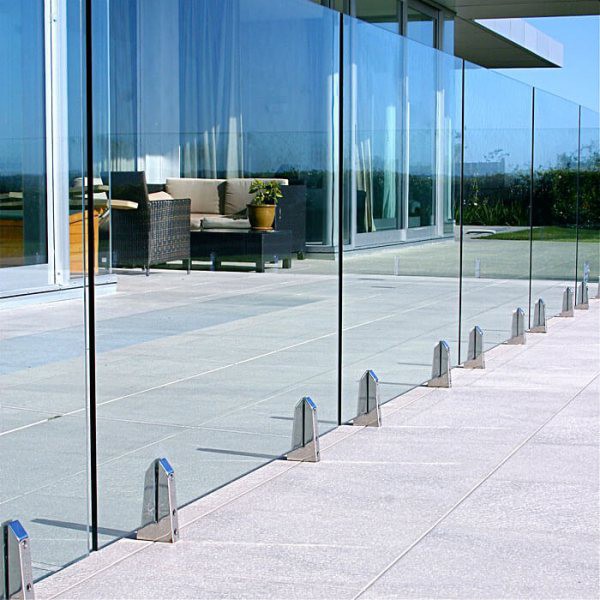
Balustrade fittings are not generic hardware items. They require specialist knowledge of glass behaviour, structural engineering, and architectural detailing.
focuses on the design and manufacture of glass hardware systems specifically for balustrade applications, supplying fittings suitable for both indoor and outdoor environments.
Their range reflects a balance between engineering performance and visual refinement, supporting modern architectural requirements without compromise.
A dedicated selection of professional glass balustrade fittings can be viewed here: Glass Balustrade Fittings
Investing in well-engineered balustrade fittings delivers long-term benefits. Reduced maintenance, consistent performance, and preserved aesthetics all contribute to the lifecycle value of the installation.
For homeowners, this translates into confidence and safety. For architects and contractors, it means reliability and reduced risk throughout the life of the project.
Glass balustrade fittings may remain largely unseen, but their influence is fundamental. They are the structural foundation that allows glass balustrades to achieve both transparency and safety.
When correctly specified and professionally installed, they enable architecture to remain visually light while performing with absolute reliability. In modern glass design, the smallest components often carry the greatest responsibility.




 در آیدت،
فایلهای
خود را به فروش بگذارید و یا
مقالاتتان
را منتشر کنید👋
در آیدت،
فایلهای
خود را به فروش بگذارید و یا
مقالاتتان
را منتشر کنید👋
پاسخ ها